June 24, 2026 5 min read
Three lights, one shade: how we photograph a swatch
Most swatches are shot once, in studio light designed to flatter. Ours are shot three times, in the lights you actually live in, and that changes what you can learn from them.
By Maya Okafor-Reyes, Co-founder & Chief Creative Officer
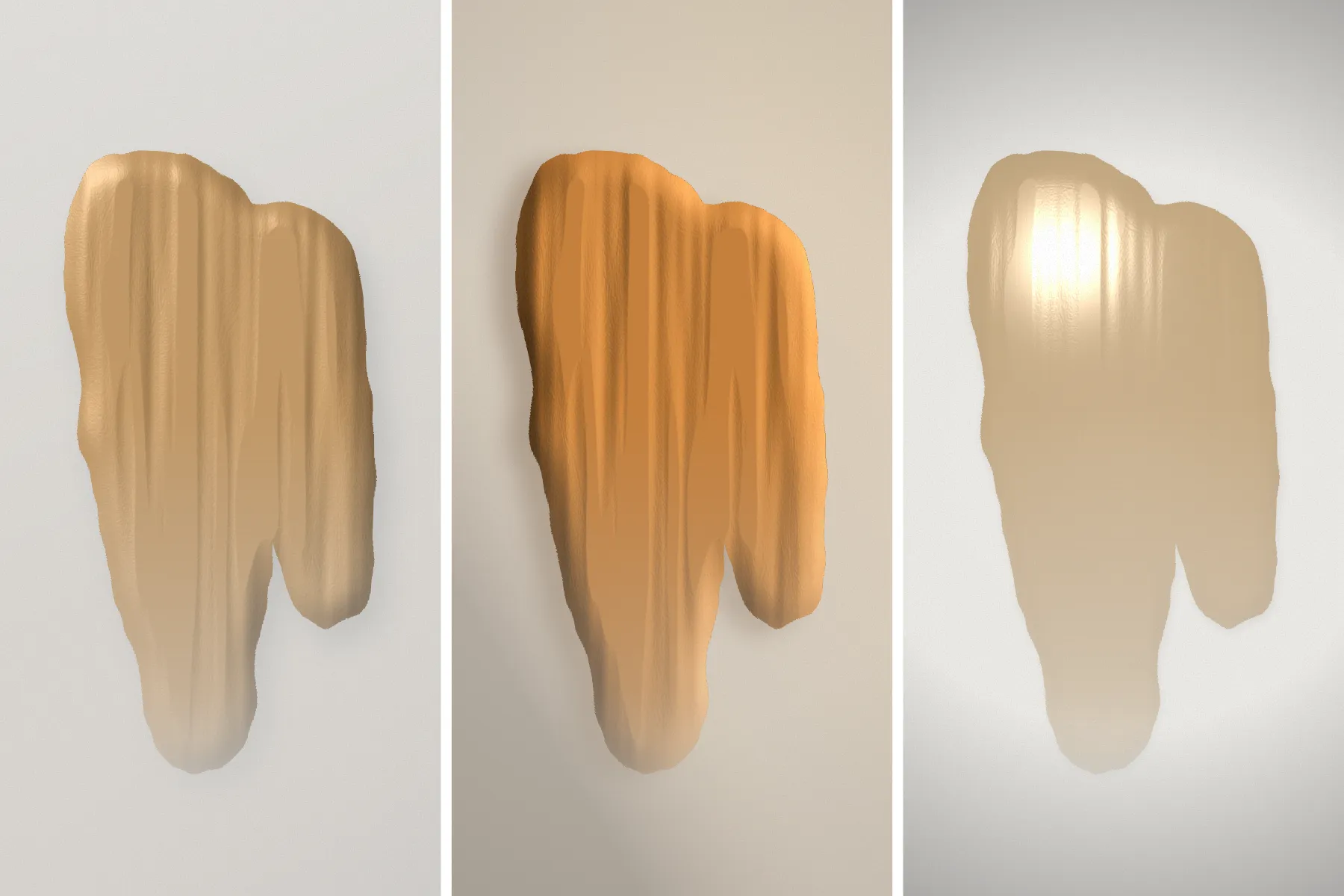
On a film set, nothing is decided by eye. A shade that looks perfect standing next to the actor can turn gray on the monitor, because the camera and the lighting have their own opinions. I spent a lot of years walking back and forth between a makeup chair and a monitor. The Light Test is that walk, done once for every shade so you do not have to guess.
The problem with one beautiful photo
A studio swatch is lit to look good. Soft, even, slightly warm. Every shade looks creamy and correct, which is the point of the lighting and the reason the photo tells you so little. You will not wear the foundation in a softbox. You will wear it on a train, in an office and in the back of someone's phone photo at dinner.
Light one: daylight
We shoot by a north-facing window in mid-morning. Indirect daylight is the most complete light there is, which makes it the most honest about undertone. Direct sun is no good: it bleaches everything and hides the difference between shades.
When you compare two shades on a product page, compare the daylight photos first. If you can only tell 250W and 250O apart in one of the three, it will be this one.
Light two: warm indoor light
The second set is shot under ordinary warm bulbs, the kind in a living room. Warm light pushes everything toward yellow. A warm shade looks richer; a cool shade can look flat. The useful question for this photo is not which shade looks best but whether the shade you chose in daylight still looks like skin.
Light three: phone flash
Then we take a phone, hold it at arm's length and fire the flash. It is cold, direct and unkind, and it is how most photos of you are actually taken. Flash bounces off white pigment, which is what makes a face look paler than the neck in pictures. If a shade or a powder is going to flash back, this is where it shows.
This light is why our setting powder comes in five tints and not one white. We saw, in the lab, what white powder did on deep skin under flash and decided not to sell it.
Three depths of skin, in the lab
A swatch on a card shows the pigment. It cannot show the skin under it, so before a shade is approved the lab also wears it on light, medium and deep skin. A blush is not a color so much as a relationship between a pigment and the skin under it. First Flush is a soft pink on fair skin and nearly invisible on deep skin. Brickyard is the reverse. Those wear tests are not photographed for the site; what they taught us is written in the note under each shade.
What we do not do
- We do not retouch for color. The card is cleaned of dust, never corrected for tone.
- We do not show a shade on skin we did not photograph. The swatch is on a gray card, and the page says so.
- We do not claim the photo is your skin. It is a reference, and a good one.
A swatch is a relationship between a pigment and the skin under it. One photo on one person cannot show you that.
How to use the photos
Compare shades with each other
Not with your wrist held up to the screen. Your screen shifts color; the difference between two shades survives it.
Find your depth first
The number in the shade name is the depth. Start with the shades at that number.
Read daylight for undertone
Then check the flash photo if you are often photographed.
Then wear it
A photo narrows it to two. Your own mirror, in daylight, picks one.
Your phone and mine will never show the same picture the same way. We cannot fix that. What we can do is make sure the picture started out true, and take the shade back if it still was not right.